Space Exploration
Journeying beyond Earth's embrace, one cosmic leap at a time! 🚀
Featured partners and sponsors
New advertisers get $25 in ad credits
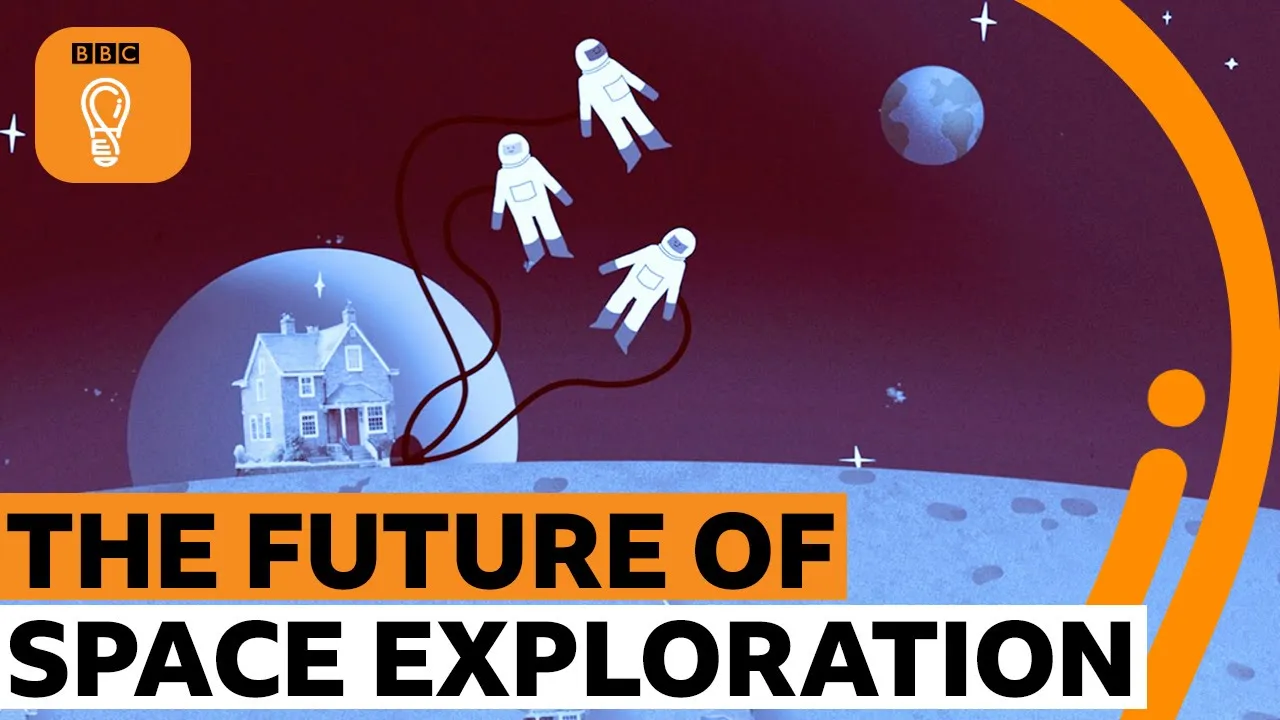
Where will space exploration take us in the next 50 years? | BBC Ideas
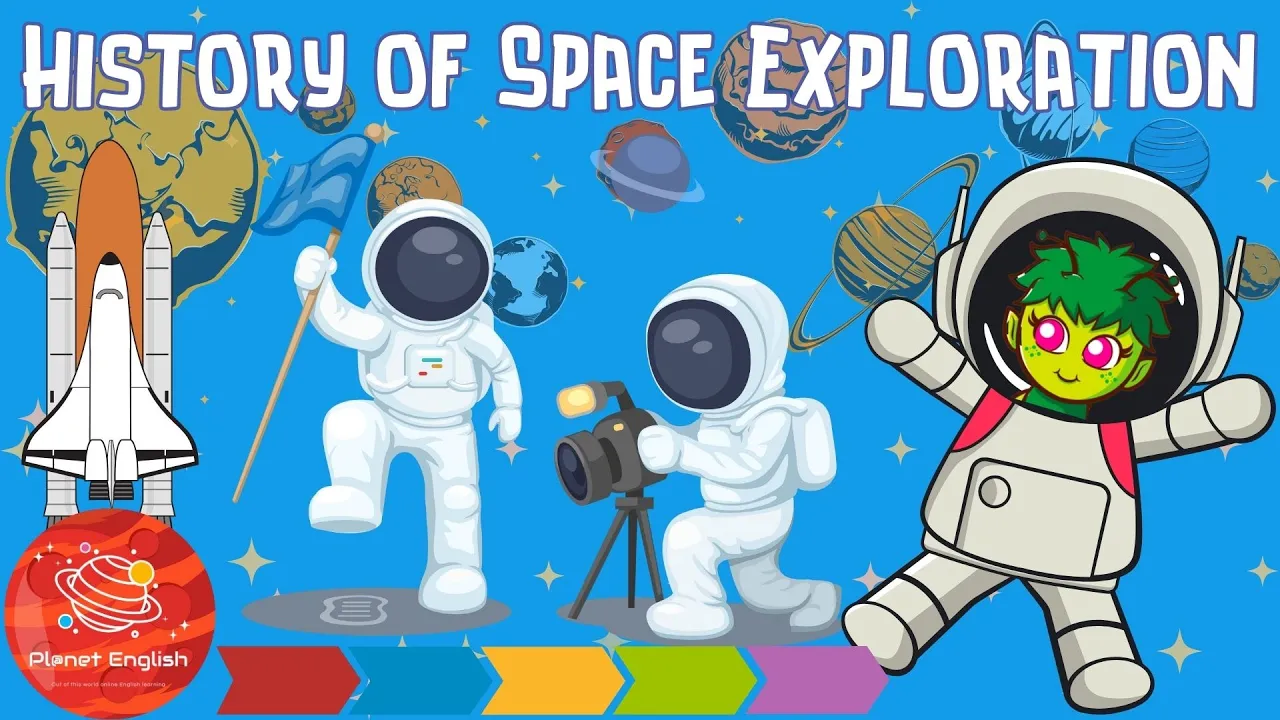
Space Exploration | KS1/KS2 History and Science | STEM and Beyond

Cosmic Gate - Exploration Of Space
We can't predict the future. And when it comes to imagining the future of space exploration, it's easy for things to get a little, well, sci-fi. But what if they're not? Here are four things that could actually happen in our lifetimes. For decades, science fiction writers have imagined a future where space elevators transport us almost effortlessly into orbit. Scientists now believe that this could, in theory, become reality, using new materials like graphene, thought to be the strongest of all known materials. Picture this - a docking station somewhere on Earth with an ultra-strong and super lightweight tether cable, which would crawl up like a lift into orbit. Space elevators could also transport things between planets and moons. That could be useful, for example, on Mars, which has a very thin atmosphere, making it really hard to land a spacecraft. A quick space elevator trip between Mars' moon Phobos and the Martian surface could make things much easier. Space tourism could become a very real thing. You'd take a space elevator to the orbit and then take another mode of transport to your destination. Day trip to the Moon, anyone? The planets, moons, and asteroids in our solar system are packed with rare materials such as nickel, iron, and cobalt, which are used for batteries, electronics, and many low-carbon technologies. The most valuable asteroid in the solar system is 511 Davida, whose value is estimated at $27 quintillion. That's 27 and 18 zeros. Meanwhile, other objects in the asteroid belt are full of diamonds. We could potentially reduce damage to the Earth's ecosystem by shifting the mining of many resources to space. Some companies and governments are already interested in exploring this, but is it theirs to exploit? In the near future, space mining is more likely to be used to make human populations in space self-sufficient, supplying fuels and materials to space stations and settlements on the Moon and Mars. Much easier than taking it with us from Eart...
⚡ THE VIBE
✨Space exploration is humanity's audacious quest to venture beyond our home planet, driven by insatiable curiosity, scientific discovery, and the profound desire to understand our place in the vast cosmos. It's a story of incredible triumphs, daring risks, and the relentless pursuit of the unknown. 🌌
§1The Cosmic Call: Why We Explore
Since the dawn of civilization, humans have gazed at the stars, wondering what mysteries they held. This innate curiosity is the bedrock of space exploration. It's not just about launching rockets; it's about pushing the boundaries of human knowledge, inspiring future generations, and solving some of Earth's most pressing problems through technological innovation. From understanding the origins of the universe to searching for extraterrestrial life, the motivations are as boundless as space itself. 🔭 It’s a collective human endeavor that transcends borders, uniting us under the common goal of discovery. Every mission, every satellite, every rover is a testament to our enduring spirit of adventure. 💫
§2From Sputnik to Starship: A Brief History
The modern era of space exploration truly ignited in the mid-20th century, fueled by the intense geopolitical rivalry of the Cold War. On October 4, 1957, the Soviet Union launched Sputnik 1, the first artificial satellite, forever changing humanity's perspective. 🛰️ Just four years later, Yuri Gagarin became the first human in space, followed shortly by Alan Shepard for the U.S. The 'Space Race' culminated in Apollo 11 in 1969, when Neil Armstrong and Buzz Aldrin walked on the Moon, a monumental achievement that captivated the entire planet. 🌕 Since then, exploration has diversified, with robotic probes like Voyager 1 venturing into interstellar space, rovers exploring Mars, and the construction of the International Space Station (ISS), a symbol of global cooperation. Today, private companies like SpaceX and Blue Origin are ushering in a new era of commercial spaceflight and ambitious plans for lunar and Martian colonization. 🚀
§3The Tools of the Trade: How We Explore
Exploring space requires an incredible array of cutting-edge technology and ingenuity. It begins with launch vehicles – powerful rockets designed to escape Earth's gravity. Once in space, various spacecraft take over: satellites for communication and Earth observation, crewed capsules for human transport, and robotic probes like the James Webb Space Telescope for deep-space observation. 🛰️ Rovers, like NASA's Perseverance, are designed to traverse alien landscapes, collecting samples and conducting experiments. The challenges are immense: extreme temperatures, radiation, vacuum, and the sheer distances involved. Engineers and scientists must devise solutions for propulsion, life support, navigation, and communication across millions, even billions, of miles. It's a continuous cycle of innovation, pushing the limits of what's possible. 💡
§4Impact Beyond the Stars: Why It Matters on Earth
The benefits of space exploration aren't confined to the cosmos; they profoundly impact life on Earth. Many technologies we take for granted today, from GPS navigation and weather forecasting to satellite TV and advanced medical imaging, originated from space research. 🌍 The drive to miniaturize, ruggedize, and optimize for space has led to countless spin-off technologies. Moreover, studying other planets helps us understand Earth's climate and geological processes better. The perspective gained from seeing our home planet from space, often called the 'Overview Effect', fosters a deeper appreciation for its fragility and interconnectedness. It inspires innovation, fosters international collaboration, and fuels scientific literacy, reminding us of humanity's boundless potential. 🌟
§5The Future Frontier: Challenges and Dreams
Looking ahead, space exploration is poised for even more ambitious endeavors. The Artemis program aims to return humans to the Moon by 2026, establishing a sustained lunar presence as a stepping stone for Mars. 🌕 Mars colonization remains a long-term goal, presenting monumental challenges in terms of radiation, resources, and psychological well-being. Beyond Mars, missions to the outer planets and even interstellar travel are being conceptualized. However, these ambitions come with significant hurdles: funding, technological limitations, ethical considerations regarding planetary protection, and the long-term effects of space travel on the human body. 🧑🚀 Yet, the dream of becoming a multi-planetary species and uncovering the universe's deepest secrets continues to drive us forward, promising a future as exciting as the cosmos itself. ✨