The Renaissance
When Europe Woke Up and Got Its Groove Back! 🎨💡
Featured partners and sponsors
New advertisers get $25 in ad credits
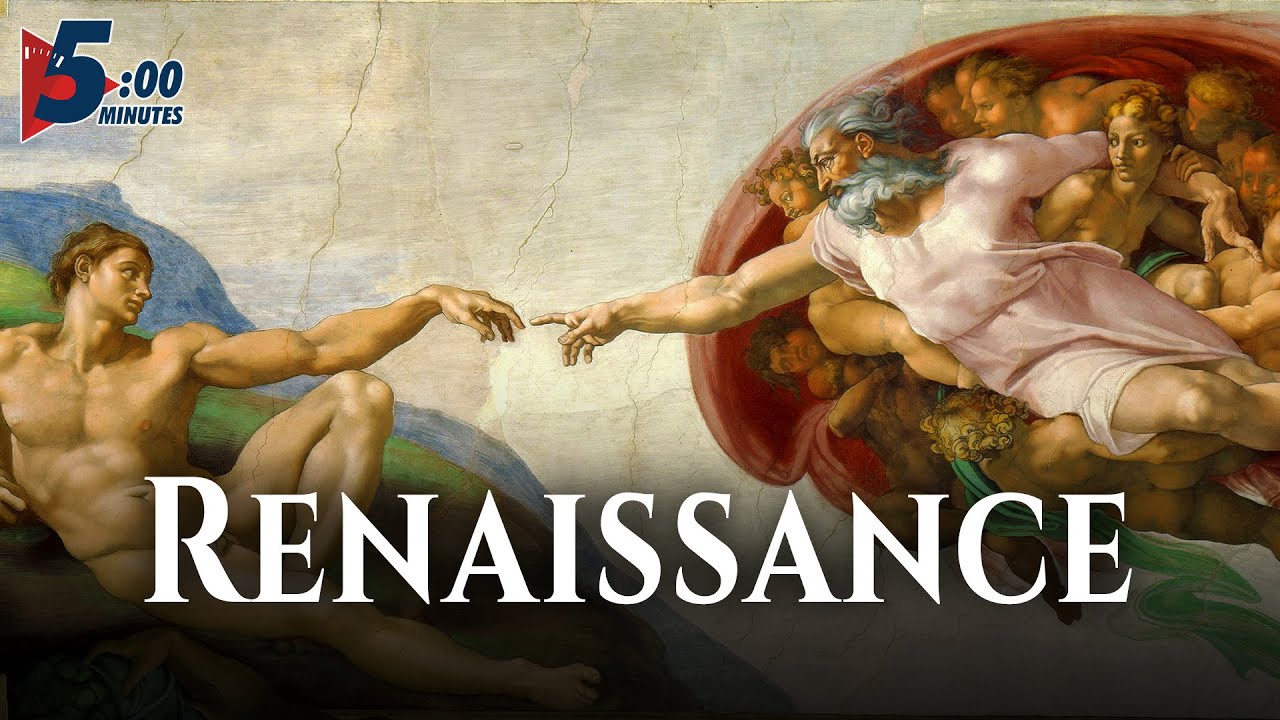
Brief History of the Renaissance | 5 MINUTES
The Renaissance - The Age of Michelangelo and Leonardo da Vinci (1/2) | DW Documentary
Renaissance The Masters Series pt. 1: Awakening (mixed by Dave Seaman) (CD 1 / HQ)
⚡ THE VIBE
✨The **Renaissance** was a transformative period in European history, marking a fervent rebirth of classical art, literature, and philosophy that fundamentally reshaped Western civilization, pulling it from the medieval shadows into a dazzling new light. It wasn't just a time; it was a *movement* that celebrated human potential and discovery! 🌟
§1What Was the Renaissance, Anyway? 🤔
Imagine a world emerging from centuries of relative intellectual dormancy, often dubbed the 'Dark Ages' (though that's a bit of a misnomer, let's be real). Suddenly, there's a collective 'aha!' moment: what if we looked back at the incredible achievements of Ancient Greece and Ancient Rome for inspiration? That's the Renaissance in a nutshell – a profound cultural, artistic, political, and economic 'rebirth' that swept across Europe, primarily from the 14th to the 17th century. It wasn't just about dusting off old texts; it was about reinterpreting them, creating something entirely new, and placing humanity at the center of the universe. This era saw a radical shift from a purely God-centric worldview to one that valued human intellect, creativity, and individual achievement. It was a time of boundless curiosity and daring innovation! 🚀
§2The Spark in Florence: Origins & Key Ideas 💡
While its influence spread far and wide, the Renaissance truly ignited in the bustling city-states of Italy, particularly in Florence during the 14th century. Why Florence? A potent cocktail of factors converged: immense wealth from trade, a burgeoning merchant class (like the powerful Medici Family), and a deep connection to its Roman past. This fertile ground fostered a new intellectual movement called Humanism. Humanists believed in the power and potential of humans, emphasizing classical education, critical thinking, and the pursuit of knowledge for its own sake. Think less 'divine intervention' and more 'human ingenuity'! They studied ancient Greek and Latin texts, not just for religious insight, but for their wisdom on ethics, politics, rhetoric, and art. This shift laid the groundwork for everything that followed, from breathtaking frescoes to revolutionary scientific theories. It was like unlocking a secret library of genius! 🗝️
§3Artistic & Scientific Revolutions 🖼️🔭
If you think of the Renaissance, you probably picture iconic art – and for good reason! This period gave us masterpieces that still drop jaws today. Artists like Leonardo da Vinci, Michelangelo, and Raphael pushed the boundaries of painting, sculpture, and architecture, mastering techniques like perspective, chiaroscuro, and sfumato to create works of unparalleled realism and emotional depth. Just look at the Mona Lisa or the Sistine Chapel ceiling! But it wasn't just about art. The Renaissance also fueled a Scientific Revolution, challenging long-held dogmas. Think Nicolaus Copernicus proposing a heliocentric universe (gasp!), Galileo Galilei refining the telescope, and anatomical studies by artists like Da Vinci himself. It was a time when observation and experimentation started to truly take hold, paving the way for modern science. Talk about a glow-up! ✨
§4Why It Matters: Cultural & Lasting Impact 🌍
The Renaissance wasn't just a historical blip; it was a seismic shift that laid many of the foundations for the modern world. Its emphasis on individualism, secularism, and critical inquiry profoundly influenced the Enlightenment and subsequent intellectual movements. The invention of the printing press by Johannes Gutenberg around 1440 was a total game-changer, democratizing knowledge and spreading Renaissance ideas like wildfire across Europe. Suddenly, books weren't just for monks and the elite! This era also saw the rise of powerful nation-states, new forms of diplomacy, and a global expansion through exploration. The Renaissance taught us to question, to create, and to celebrate the incredible potential within each human being. Its legacy is literally all around us, from our educational systems to our appreciation of art and science. It's the ultimate 'level up' in human history! 📈
§5Beyond Italy: The Northern Renaissance & Its Nuances 🏰
While Italy was the birthplace, the Renaissance wasn't confined to the Mediterranean. It spread northward, evolving into what's known as the Northern Renaissance, with distinct characteristics. Artists like Jan van Eyck and Albrecht Dürer brought incredible detail and realism to their work, often with a more religious focus and a keen eye for everyday life, using oil paints to achieve luminous effects. Think of the intricate symbolism in Northern European art! Writers like William Shakespeare in England and Desiderius Erasmus in the Netherlands explored the complexities of the human condition with unparalleled depth. This period also saw the Protestant Reformation (led by figures like Martin Luther), a religious upheaval that was both influenced by and influenced the Renaissance's spirit of questioning authority. The Renaissance was a truly pan-European phenomenon, adapting and transforming as it traveled, proving that great ideas can blossom anywhere! 🌷