Game Theory
Unlocking the secrets of strategic decisions, from chess to climate change! 🎲
Featured partners and sponsors
New advertisers get $25 in ad credits

Game Theory #12: The Law of Eschatological Convergence

Game Theory #11: The Law of Escalation
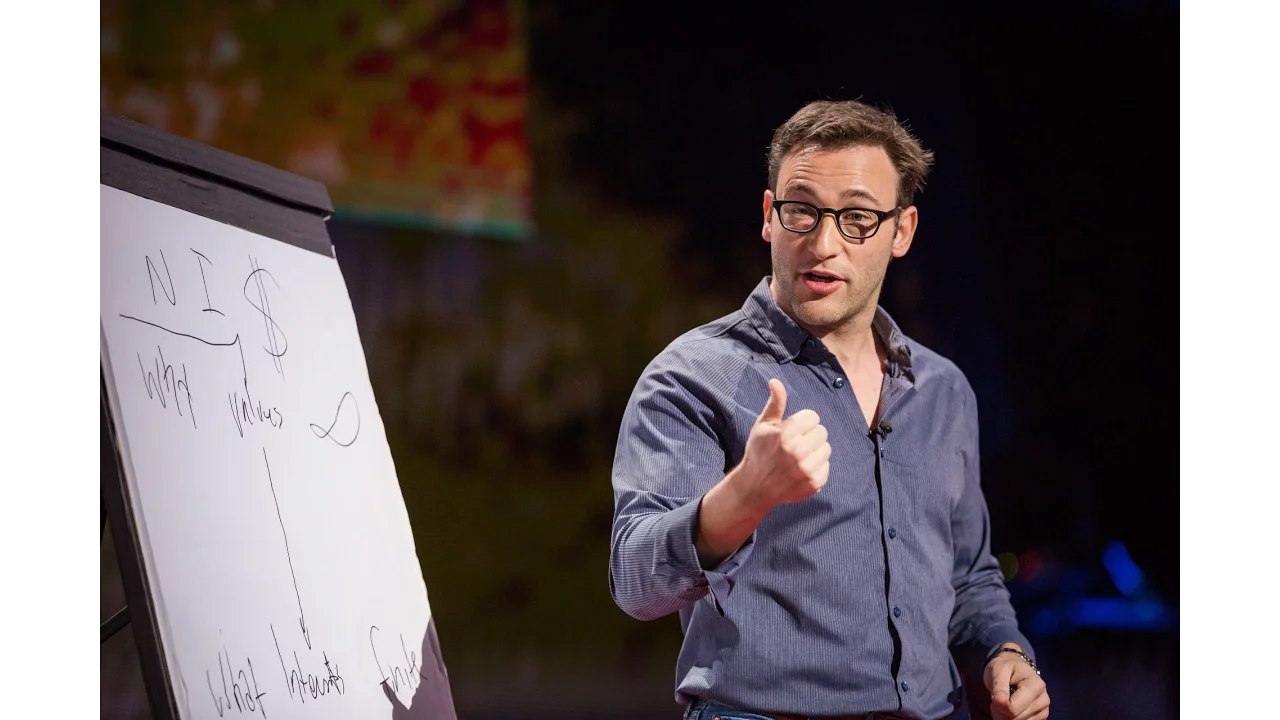
What game theory teaches us about war | Simon Sinek
As I mentioned last class, there are three major questions that will determine how this war is fought, what they what this war uh will end up looking like, and how the world will change. And um as I discussed last class, I'm making three predictions about this war. The first is United States will use ground troops. Um, and this will mean that Donald Trump will institute a national draft. Okay, that's the first prediction. Second prediction is that Israel and United States will not use tactical nuclear weapons in this war. Number three is that the Alaxic Moss, the third holiest site in the Islamic world, will be destroyed during this war. Okay. So, last class I explained my analysis and my reasoning for um my first two predictions. Today I'll explain my uh third prediction. So, but before we start, I just want to look at some videos, okay? So, you understand some of the context, some of the players in this war. All right? So this is Senator Bloomthal of Connecticut and he is one of the hundred members of the US Senate. He's also one of the members of the gang of eight. Now um when when you are fighting a war, the White House has responsibility to report its um objectives, its purpose, um how the war is progressing to eight members of Congress in a confidential setting. Okay. And this is um Senator Bloomthal after he's been debriefed by the White House. Okay. And this is what he has to say about the progress of the war so far. >> I emerge from this briefing as dissatisfied and angry, frankly, as I have from any past briefing in my 15 years in the Senate. I am left with more questions than answers, especially about the cost of the war. My questions have been unanswered and I will demand answers because the American people deserve to know. And I guess I am most concerned about the threat to American lives of potentially deploying our sons and daughters on the ground in Iran. We seem to be on a path toward deploying American troops on the ground in Iran to accomplish any...
⚡ THE VIBE
✨Game Theory is a mind-bending mathematical framework that analyzes strategic interactions between rational decision-makers, revealing the optimal choices and likely outcomes in scenarios ranging from economic markets to international diplomacy. It's the ultimate toolkit for understanding why people (and algorithms!) do what they do when their success depends on others. 💡
§1What is Game Theory? The Art of Strategic Thinking 🧠
Imagine a world where every move you make is influenced by what others might do, and their moves are influenced by yours. Welcome to the captivating realm of Game Theory! It's a branch of mathematics and economics that provides a powerful lens for understanding and predicting behavior in strategic situations, often called 'games.' But don't let the name fool you – these aren't just board games. We're talking about complex interactions where the outcome for each participant depends on the actions of all participants. From a simple game of rock-paper-scissors to global trade negotiations, Game Theory offers a structured way to analyze choices, payoffs, and the pursuit of self-interest. It's about finding the optimal strategy when you're not playing alone. 🚀
§2A Brief History: From Zero-Sum to Nobel Prizes 🏆
While hints of strategic thinking can be found in ancient texts, modern Game Theory truly kicked off in the mid-20th century. The seminal work, Theory of Games and Economic Behavior, published in 1944 by mathematician John von Neumann and economist Oskar Morgenstern, laid the foundational stone. They initially focused on zero-sum games, where one player's gain is exactly another's loss, like poker. However, the field exploded with the contributions of brilliant minds like John Nash, whose concept of the Nash Equilibrium revolutionized our understanding of non-cooperative games where players might find stable outcomes even without perfect cooperation. Nash, along with Reinhard Selten and John Harsanyi, received the Nobel Memorial Prize in Economic Sciences in 1994 for their pioneering work, cementing Game Theory's place as a cornerstone of modern social science. 🌟
§3Key Concepts: Nash Equilibrium, Prisoner's Dilemma, and More! 🧐
Game Theory is rich with fascinating concepts that explain real-world phenomena. Perhaps the most famous is the Nash Equilibrium, a state where no player can improve their outcome by unilaterally changing their strategy, assuming other players' strategies remain unchanged. Think of it as a stable point in a strategic interaction. Another iconic example is the Prisoner's Dilemma, a classic scenario illustrating why two rational individuals might not cooperate, even if it appears to be in their best interest to do so. This dilemma highlights the tension between individual rationality and collective well-being. Other crucial concepts include: dominant strategies, where one choice is always better regardless of what others do; subgame perfect equilibrium, for analyzing sequential games; and repeated games, where interactions happen multiple times, allowing for reputation and retaliation. These tools help us model everything from market competition to political bargaining. 🎲
§4Real-World Impact: Shaping Decisions Everywhere 🌐
Game Theory isn't just an academic exercise; its applications are incredibly diverse and impactful. In economics, it's used to design auctions, analyze market competition, and understand pricing strategies. In political science, it models international relations, voting behavior, and coalition formation. Biologists use it to understand evolutionary stable strategies in animal behavior. Computer scientists apply it to develop AI algorithms, network protocols, and cybersecurity measures. Even in everyday life, you implicitly use game theory when deciding whether to merge into traffic, negotiate a deal, or choose a restaurant with friends. It's a powerful framework for strategic thinking that helps us navigate a world of interdependent choices. Want to dive deeper? Check out resources from the Game Theory Society. 📈
§5Challenges & The Future: Beyond Rationality 🔮
While incredibly powerful, Game Theory isn't without its critics or limitations. A core assumption is that players are perfectly rational and always act to maximize their own utility. However, human behavior is often influenced by emotions, biases, and imperfect information, leading to outcomes that deviate from theoretical predictions. This has led to the rise of Behavioral Game Theory, which integrates insights from psychology to create more realistic models of decision-making. As AI becomes more sophisticated, Game Theory is also crucial for designing intelligent agents that can interact strategically with both humans and other AIs. The future of Game Theory lies in refining its models to account for the messy, beautiful complexity of real-world interactions, making it an ever-evolving field. 🤖✨