Blockchain
The distributed ledger technology that's reshaping trust and transparency! 🔗
Featured partners and sponsors
New advertisers get $25 in ad credits
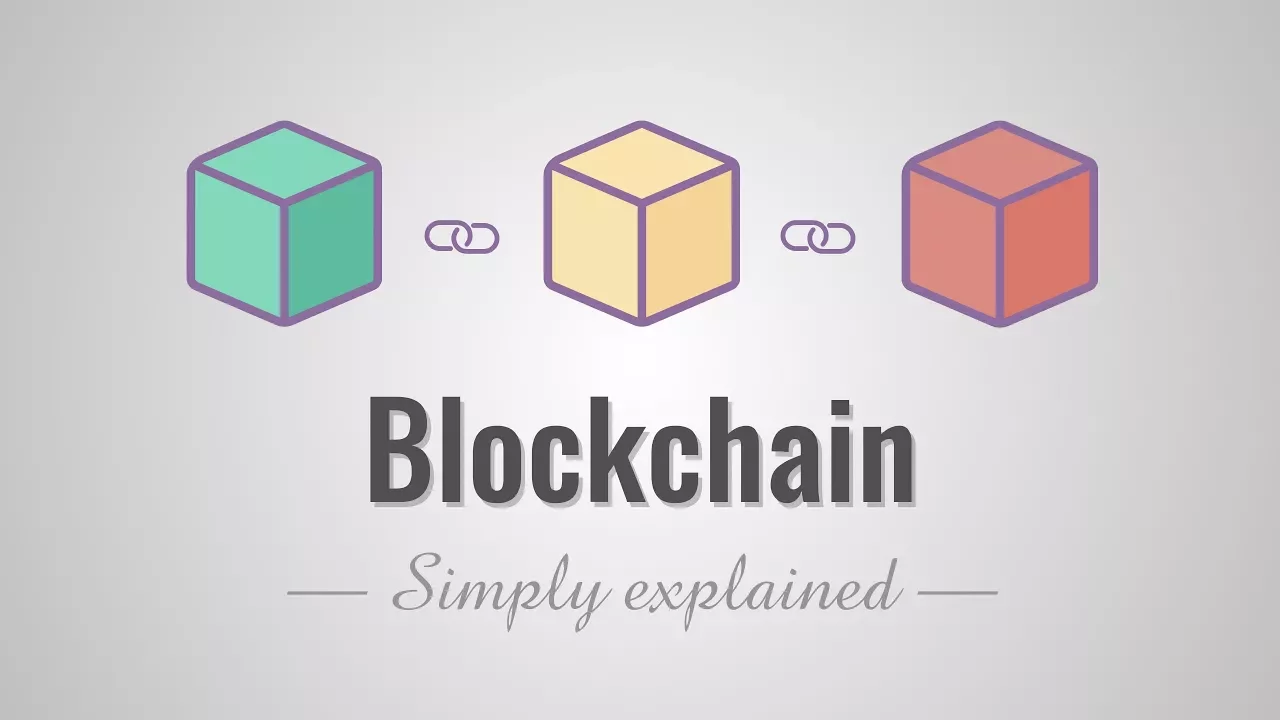
How does a blockchain work - Simply Explained
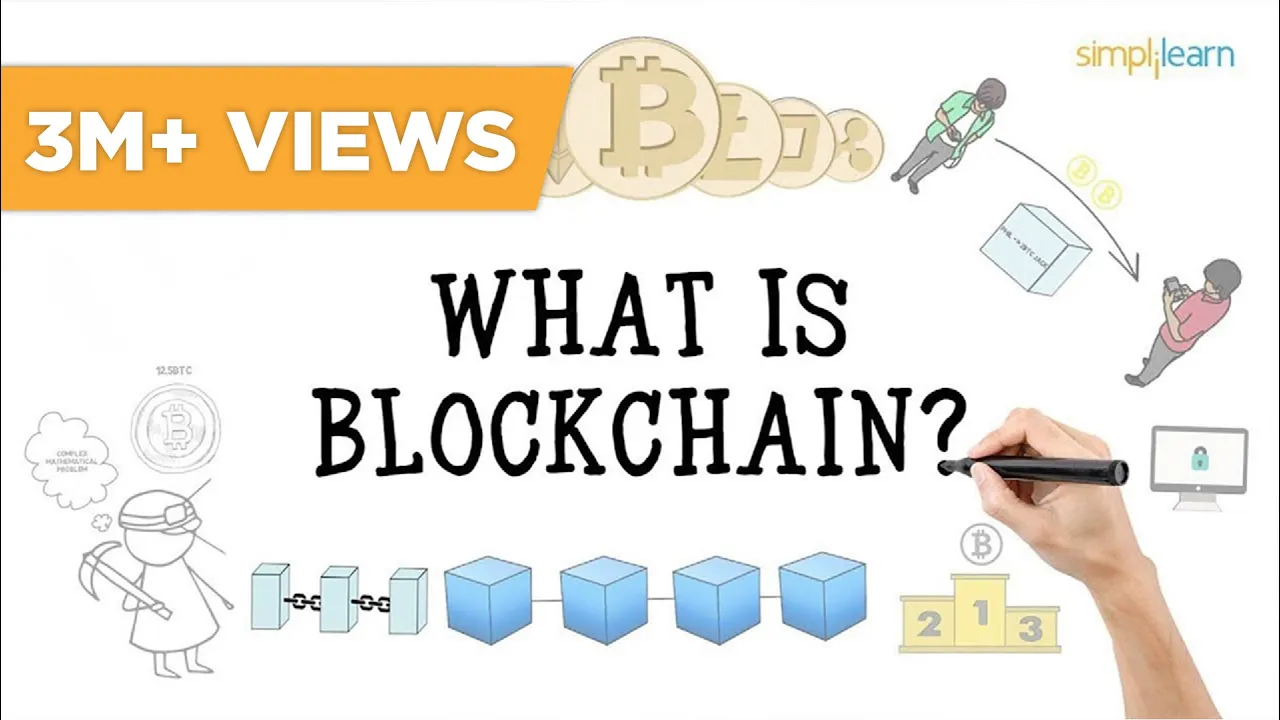
Blockchain In 7 Minutes | What Is Blockchain | Blockchain Explained|How Blockchain Works|Simplilearn
Blockchain Technology Explained (2 Hour Course)
Blockchains are incredibly popular nowadays. But what is a blockchain? How do they work, what problems do they solve and how can they be used? Like the name indicates, a blockchain is a chain of blocks that contains information. This technique was originally described in 1991 by a group of researchers and was originally intended to timestamp digital documents so that it’s not possible to backdate them or to tamper with them. Almost like a notary. However it went by mostly unused until it was adapted by Satoshi Nakamoto in 2009 to create the digital cryptocurrency Bitcoin. A blockchain is a distributed ledger that is completely open to anyone. They have an interesting property: once some data has been recorded inside a blockchain, it becomes very difficult to change it. So how does that work? Well, let’s take a closer look at a block. Each block contains some data, the hash of the block and the hash of the previous block. The data that is stored inside a block depends on the type of blockchain. The Bitcoin blockchain for example stores the details about a transaction in here, such as the sender, receiver and amount of coins. A block also has a hash. You can compare a hash to a fingerprint. It identifies a block and all of its contents and it's always unique, just as a fingerprint. Once a block is created, it’s hash is being calculated. Changing something inside the block will cause the hash to change. So in other words: hashes are very useful when you want to detect changes to blocks. If the fingerprint of a block changes, it no longer is the same block. The third element inside each block is the hash of the previous block. This effectively creates a chain of blocks and it’s this technique that makes a blockchain so secure. Let's take an example. Here we have a chain of 3 blocks. As you can see, each block has a hash and the hash of the previous block. So block number 3 points to block number 2 and number 2 points to number 1. Now the first block is a bit special, it...
⚡ THE VIBE
✨Blockchain is a revolutionary distributed ledger technology that securely records transactions across a network of computers, creating an immutable and transparent record without the need for a central authority. It's the backbone of cryptocurrencies and a powerful tool for reimagining data integrity across industries. 🚀
§1What in the World is a Blockchain? 🤔
Imagine a digital ledger, like a giant shared spreadsheet, where every transaction or piece of data is recorded. Now, imagine that this spreadsheet isn't controlled by one person or company, but by thousands of computers all over the world. That's the essence of a blockchain. Each 'block' in the chain contains a batch of transactions, and once a block is added, it's cryptographically linked to the previous one, forming an unbreakable 'chain'. This creates an incredibly secure and transparent record that's almost impossible to tamper with. Think of it as a global, uneditable history book for data. 📖
§2The Genesis: From Cryptography to Cryptocurrency 💡
While the concept of linked, cryptographically secured blocks dates back to the early 90s with researchers like Stuart Haber and W. Scott Stornetta, the modern blockchain as we know it truly burst onto the scene in 2008. An anonymous entity known as Satoshi Nakamoto published a whitepaper titled 'Bitcoin: A Peer-to-Peer Electronic Cash System,' detailing a decentralized digital currency. Bitcoin was the first practical application of blockchain technology, demonstrating how a distributed network could achieve consensus without a central authority. It was a game-changer, proving that trust could be engineered into a system, rather than relying on intermediaries. 💰
§3How the Magic Happens: Blocks, Hashes, and Consensus ✨
At its core, blockchain relies on some pretty clever cryptographic wizardry. Each block contains: 1) a timestamp, 2) transaction data, and 3) a unique cryptographic hash of the previous block. This hash is like a digital fingerprint; if even one tiny piece of data in the previous block changes, its hash changes dramatically, breaking the chain. This is what makes it so secure! To add a new block, network participants (often called 'miners' in proof-of-work systems like Bitcoin) must solve a complex computational puzzle. Once solved, the new block is broadcast to the network, and other participants verify its validity. This process, known as a consensus mechanism (like Proof-of-Work or Proof-of-Stake), ensures everyone agrees on the single, true version of the ledger. No single point of failure, no single point of control. Decentralization for the win! 🌐
§4Beyond Bitcoin: The Expanding Universe of Blockchain Applications 🌌
While Bitcoin put blockchain on the map, the technology's potential extends far beyond digital cash. The advent of Ethereum in 2015, with its concept of smart contracts (self-executing agreements coded directly onto the blockchain), truly unlocked a new universe of possibilities. Today, blockchain is being explored for:
- Supply Chain Management: Tracking goods from origin to consumer, ensuring transparency and authenticity. 📦
- Digital Identity: Giving individuals more control over their personal data and verifiable credentials. 🆔
- Healthcare: Securely managing patient records and medical data. 🩺
- Voting Systems: Creating transparent and tamper-proof elections. 🗳️
- Non-Fungible Tokens (NFTs): Proving ownership of unique digital assets like art and collectibles. 🖼️
- Decentralized Finance (DeFi): Rebuilding financial services without traditional banks. 🏦
The implications are staggering, promising a future where intermediaries are reduced, and trust is baked into the system itself. It's a fundamental shift in how we organize and verify information.
§5Challenges, Controversies, and the Road Ahead 🚧
Despite its immense promise, blockchain isn't without its hurdles. Scalability remains a major challenge; processing millions of transactions per second, like traditional payment networks, is still a work in progress for many blockchains. Environmental concerns surrounding the energy consumption of Proof-of-Work systems have also sparked debate, leading to the rise of more energy-efficient alternatives. Regulatory uncertainty and the potential for illicit activities (though often overblown) also present ongoing challenges. However, the pace of innovation is relentless. Researchers and developers are constantly refining the technology, exploring new consensus mechanisms, and building layer-2 solutions to address these issues. The journey to a fully decentralized, blockchain-powered future is complex, but the destination promises unprecedented levels of transparency, security, and autonomy. The 'blockchain revolution' is still very much in its early innings! ⚾