Black Holes
Where gravity gets so intense, not even light can escape! 🌌
Featured partners and sponsors
New advertisers get $25 in ad credits
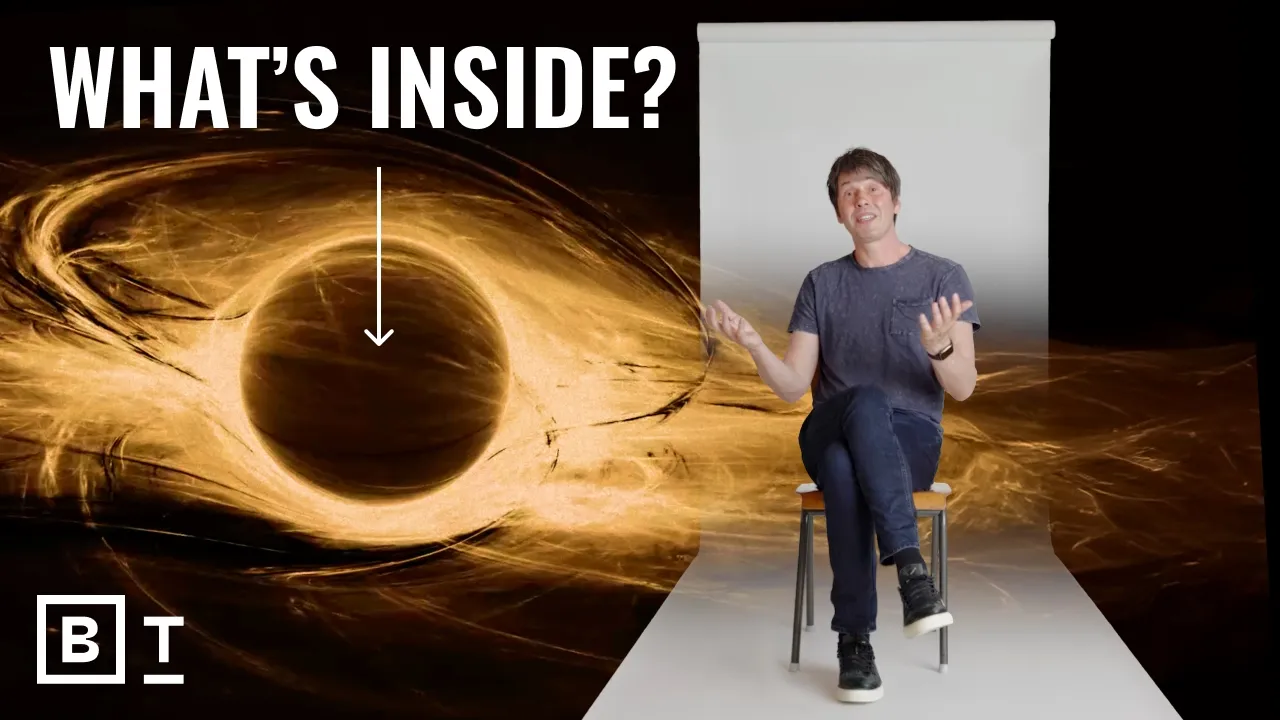
Brian Cox: Why black holes could hold the secret to time and space | Full Interview
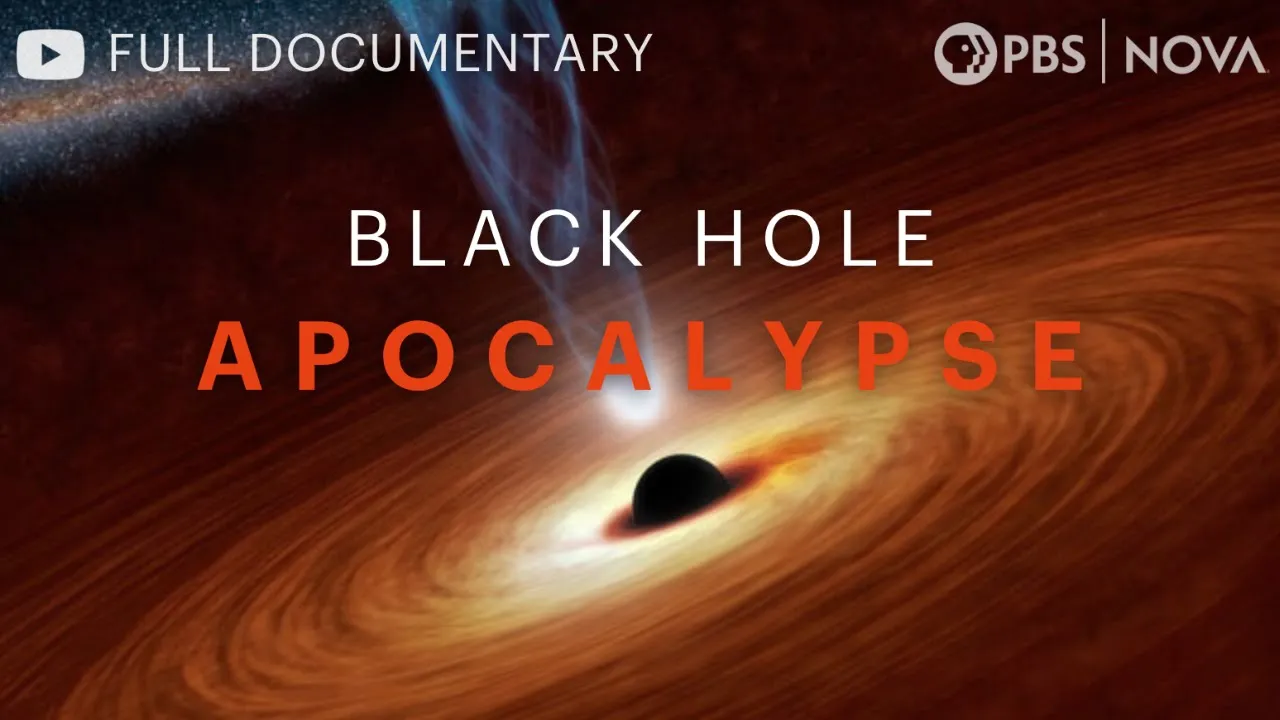
Black Hole Apocalypse: What's Inside a Black Hole? | Full Documentary | NOVA | PBS

What Bothers Physicists About Black Holes (Interview with Brian Cox)
⚡ THE VIBE
✨Black holes are regions of spacetime where gravity is so incredibly strong that nothing—not even light—can escape, forming from the dramatic collapse of massive stars or existing as supermassive behemoths at galactic centers. They're not just cosmic drains; they're extreme laboratories of physics, challenging our understanding of reality itself! 🤯
§1The Ultimate Cosmic Trap Door 🕳️
Imagine a place in the universe where the laws of physics as we know them get twisted into a pretzel, and gravity becomes an insatiable monster. That's a black hole for you! These aren't just empty voids; they're incredibly dense objects with a gravitational pull so powerful that once you cross a certain boundary—the event horizon—there's no turning back. Not even light, the fastest thing in the cosmos, can escape its clutches. They are the universe's most efficient cosmic recycling centers, devouring everything in their path, from gas and dust to entire stars. But don't let the name fool you; they're not 'holes' in the traditional sense, but rather incredibly compact masses warping the fabric of spacetime itself. It's like the universe's ultimate magic trick, making matter disappear from our observable reality. 🪄
§2From Theoretical Curiosity to Cosmic Reality 🔭
The concept of an object so dense that light couldn't escape dates back to the 18th century with thinkers like John Michell and Pierre-Simon Laplace. However, the modern understanding of black holes truly began with Albert Einstein's Theory of General Relativity in 1915, which described gravity not as a force, but as a curvature of spacetime caused by mass and energy. Just months later, German physicist Karl Schwarzschild found the first exact solution to Einstein's field equations, describing the gravitational field around a spherical mass, which included a critical radius (now known as the Schwarzschild radius) where escape velocity equals the speed of light. Initially, these 'dark stars' were seen as mathematical curiosities. It wasn't until the mid-20th century, with work by scientists like J. Robert Oppenheimer and Stephen Hawking, that their physical reality and formation mechanisms became widely accepted. The term 'black hole' itself was coined by physicist John Wheeler in 1967, and it stuck! 🌟
§3The Anatomy of a Cosmic Enigma 🧠
A black hole isn't just a singular point; it has distinct regions, each with its own mind-bending properties. At its heart lies the singularity, a point of infinite density where all the mass of the black hole is concentrated. This is where our current understanding of physics completely breaks down. Surrounding the singularity is the event horizon, often called the 'point of no return.' Cross this invisible boundary, and you're irrevocably bound to the black hole's gravity. For rotating black holes (called Kerr black holes), there's also an ergosphere, a region outside the event horizon where spacetime itself is dragged along by the black hole's rotation. Objects in the ergosphere can gain energy from the black hole, potentially allowing for energy extraction through processes like the Penrose process. And for those accreting matter, a swirling disk of superheated gas and dust, called an accretion disk, often forms around the event horizon, glowing brightly in X-rays as it spirals inward. This is often how we detect them! 💫
§4Types, Detection, and Galactic Architects 🏗️
Black holes come in various sizes, each with its own cosmic story:<ul><li>Stellar-mass black holes: Formed from the gravitational collapse of massive stars (typically 20-30 times the mass of our Sun) at the end of their lives, leaving behind a core that collapses into a black hole. These are scattered throughout galaxies.</li><li>Supermassive black holes (SMBHs): Ranging from millions to billions of times the mass of our Sun, these behemoths lurk at the centers of nearly all large galaxies, including our own Milky Way galaxy, where Sagittarius A* resides. Their formation is still a hot topic of research!</li><li>Intermediate-mass black holes (IMBHs): A more elusive class, these are thought to be between stellar-mass and supermassive black holes, potentially forming from the merger of smaller black holes or the collapse of very dense star clusters.</li></ul>We can't see black holes directly because they emit no light. Instead, we detect them by observing their effects on surrounding matter: the gravitational tug on nearby stars, the intense X-ray emissions from superheated accretion disks, or the gravitational waves produced when two black holes merge. The groundbreaking image of the M87 galaxy's supermassive black hole by the Event Horizon Telescope in 2019 was a monumental achievement, directly visualizing the shadow of an event horizon for the first time! 📸
§5The Future: Unraveling Cosmic Mysteries 🔮
Black holes are not just fascinating objects; they are crucial to understanding the universe. They play a significant role in galaxy formation and evolution, influencing the birth and death of stars. They also serve as extreme laboratories for testing the limits of Einstein's General Relativity and exploring the elusive quest for a unified theory of everything, bridging quantum mechanics with gravity. Concepts like Hawking Radiation, theorized by Stephen Hawking, suggest that black holes aren't entirely 'black' but slowly evaporate over cosmic timescales, emitting particles. While yet to be directly observed, this idea hints at a profound connection between gravity and quantum physics. As technology advances, with projects like the James Webb Space Telescope and next-generation gravitational wave observatories like LIGO and Virgo, our ability to observe and understand these cosmic titans will only grow. The secrets they hold could unlock some of the deepest mysteries of the cosmos! 🚀