Aurora Borealis
The Earth's most dazzling celestial light show, powered by the sun!
Featured partners and sponsors
New advertisers get $25 in ad credits
The science behind the northern lights (aurora borealis)

What is an aurora? - Michael Molina

What Is an Aurora?
⚡ THE VIBE
✨The Aurora Borealis, or Northern Lights, is a breathtaking celestial phenomenon where the night sky erupts in a symphony of vibrant colors, a cosmic dance fueled by the sun's energy and Earth's magnetic shield.
§1The Cosmic Canvas: What is the Aurora Borealis?
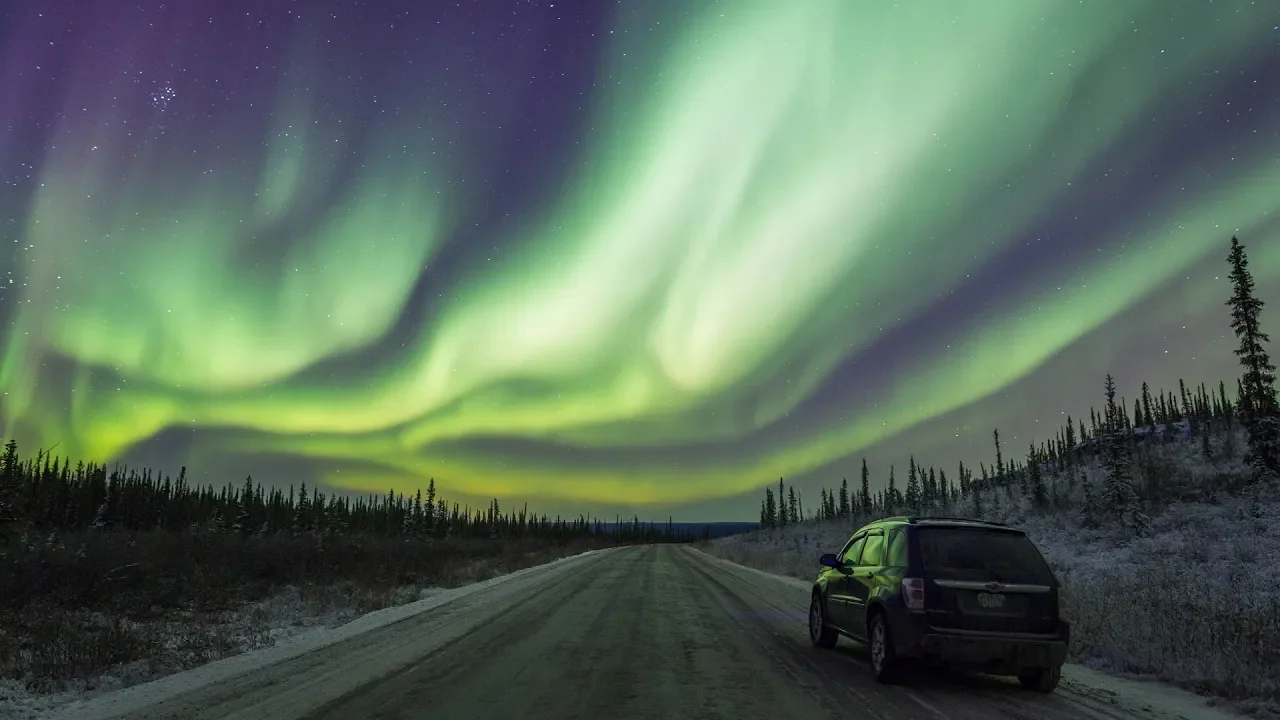
Imagine the night sky transforming into a colossal, living canvas, brushed with ethereal streaks of green, pink, purple, and sometimes even red light. That, my friends, is the Aurora Borealis, often called the Northern Lights. It's not magic, though it certainly feels like it; it's pure, unadulterated space weather putting on a show! 🌌 These shimmering curtains of light are a direct result of charged particles from the sun—the solar wind—colliding with gases in Earth's upper atmosphere. It's a spectacular visual reminder of our planet's dynamic interaction with the cosmos, a phenomenon that has captivated humanity for millennia. This isn't just a pretty sight; it's a window into fundamental physics, a grand display of electromagnetism on a planetary scale. Truly mind-bending! 🤯
§2Born from the Sun: The Science Behind the Spectacle ☀️
So, how does this celestial ballet actually happen? It all starts with our star, the sun, which constantly ejects a stream of charged particles known as the solar-wind. When these high-energy electrons and protons reach Earth, they encounter our planet's powerful magnetic-field, which acts like a giant shield, deflecting most of them. However, at the poles, the magnetic field lines converge, creating 'funnels' where some of these particles can sneak through and dive into our atmosphere. 🚀
As these solar particles slam into atmospheric gases like oxygen and nitrogen, they excite the atoms. Think of it like a neon sign: when electricity passes through the gas, it glows! Different gases and altitudes produce different colors: oxygen typically emits the vibrant greens and reddish-pinks, while nitrogen contributes the blues and purples. The altitude of the collision also plays a role, with greens often appearing lower (around 100-300 km) and reds higher up (300-400 km). It's a complex, beautiful interaction, a true marvel of space-physics.
§3A Tapestry of Legends: Cultural Significance & History 📜
Before science unveiled its secrets, the Aurora Borealis was a source of awe, wonder, and sometimes, fear, inspiring countless myths and legends across cultures. For the indigenous peoples of the Arctic, like the Inuit and Sámi, the lights were often seen as spirits of ancestors dancing in the sky, or even as a bridge to the afterlife. Some believed they were the spirits of animals, or warnings from the gods. 👻
In Norse mythology, the Aurora was thought to be the glimmer of the Valkyries' armor as they rode to battle, or the Bifröst Bridge, connecting Midgard (Earth) to Asgard (the realm of the gods). Even Galileo Galilei in the 17th century, though not fully understanding its cause, coined the term 'Aurora Borealis' after the Roman goddess of dawn, Aurora, and Boreas, the Greek god of the north wind. This phenomenon has truly woven itself into the very fabric of human storytelling and spiritual belief, a timeless connection between humanity and the cosmos. 💫
§4Chasing the Lights: Where and When to Witness the Magic 📍
To experience the Aurora Borealis in all its glory, you need to head to the auroral oval, a region circling Earth's magnetic poles. For the Northern Lights, this means venturing into high-latitude areas. 🗺️
Top destinations include:
- Norway: Tromsø, Lofoten Islands
- Sweden: Abisko National Park
- Finland: Lapland (Rovaniemi, Levi)
- Iceland: Reykjavik and remote areas
- Canada: Yukon (Whitehorse), Northwest Territories (Yellowknife)
- Alaska, USA: Fairbanks, Anchorage
The best time to see them is during the dark, clear nights of winter, typically from late August to April. The darker the sky, the better! Avoid city lights and check space-weather-forecasts for high Kp-index values, which indicate stronger geomagnetic activity and thus, a more vibrant display. Patience is key, but the reward is absolutely unforgettable! 🤩
§5Beyond the Borealis: Auroras on Other Worlds & Future Insights 🔭
While the Aurora Borealis is our local masterpiece, Earth isn't the only planet boasting these incredible light shows! Gas giants like Jupiter and Saturn have even more powerful and persistent auroras, thanks to their immense magnetic fields and rapid rotations. The Hubble-Space-Telescope has captured stunning ultraviolet auroras on these distant worlds, revealing their dynamic interactions with their moons and the solar wind. Even Mars has faint, localized auroras! 🪐
As our understanding of space weather grows, so does our ability to predict and even potentially harness aspects of these phenomena. The study of auroras continues to provide critical data for understanding planetary magnetospheres, solar activity, and the fundamental forces that shape our universe. It's a reminder that even in 2026, the cosmos still holds endless wonders, and the Aurora Borealis remains one of its most accessible and awe-inspiring gifts. Keep looking up! 🌟